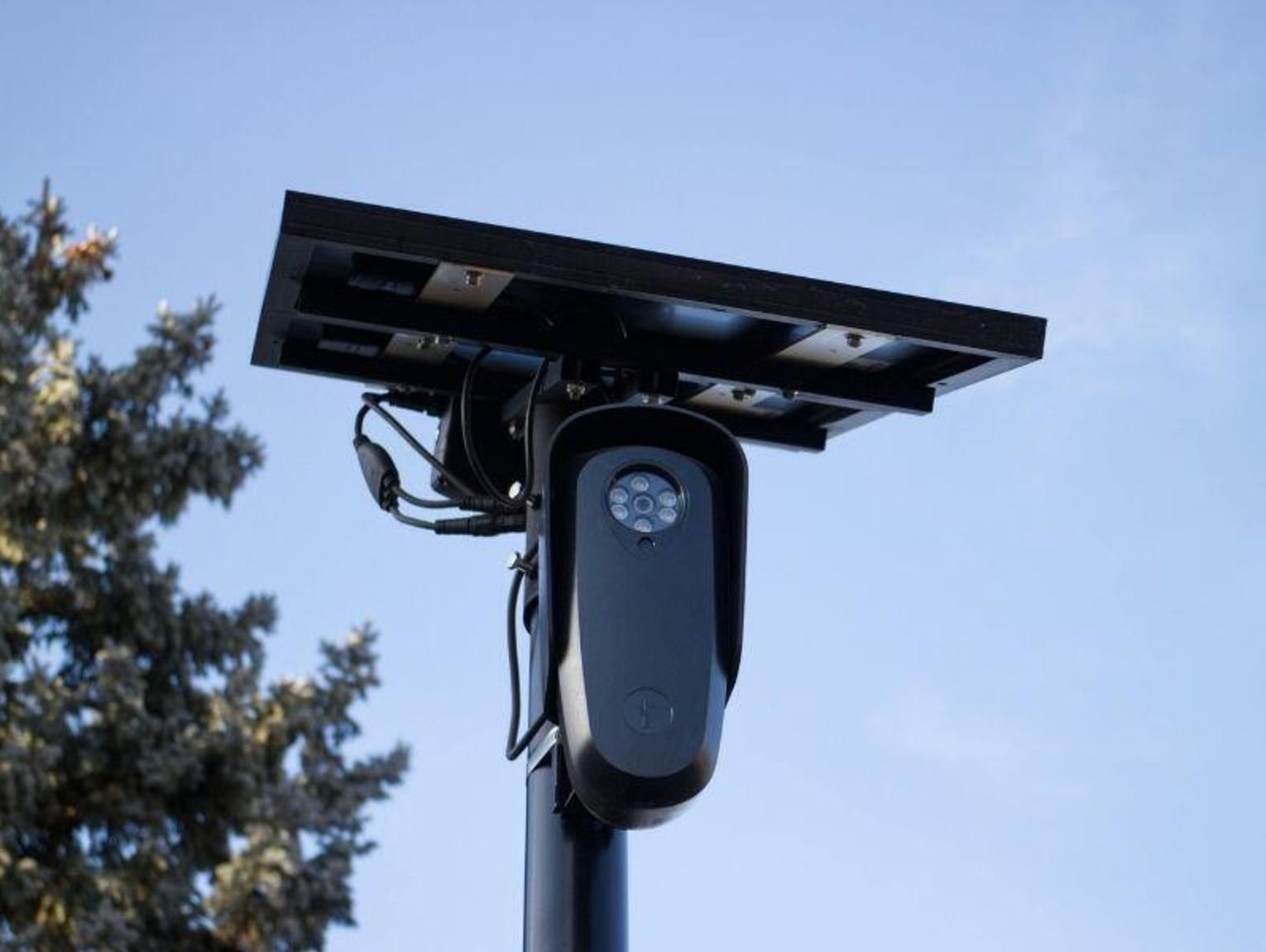
The Kendall County Commissioners Court voted unanimously Tuesday not to renew its agreement with Flock Safety Group, ending the county’s participation in the company’s automated license plate recognition program after roughly a year of debate over the technology’s public safety benefits, privacy implications and potential for misuse.
The 5-0 vote came Aug. 25 following an impassioned presentation from Kendall County Sheriff Al Auxier, who urged commissioners to give his office another year to demonstrate the effectiveness of the system.
“All I’m asking is to be allowed to use this tool,” Auxier told the court. “Not against you, not to watch every move that you make. To allow me to use it as a good, viable police tool, to help expedite police work and investigations.”
The agreement before commissioners would have continued the county’s participation in the Flock Safety platform from Oct. 1, 2026, through Sept. 30, 2027, at a cost not to exceed $198,550. Approximately 80% of the cost would have been covered by a grant from the Motor Vehicle Crime Prevention Authority.
Auxier argued that the cameras have served as a “force multiplier” for investigators and presented several examples of their use in Kendall County, including the recovery of stolen construction equipment, investigations into burglaries and mail theft, locating a missing elderly woman with dementia and helping apprehend a murder suspect.
“ALPRs do not solve crimes. Investigators solve crimes,” Auxier said. “The ALPR helps the investigators determine where to look. A hit of an LPR is not an automatic proof, probable cause or guilt.”
Auxier also addressed concerns that the cameras could be used to continuously track residents. He said Kendall County has approximately 54 automated license plate readers spread across the county’s 662 square miles and argued that the system records vehicles only as they pass individual camera locations.
“I’m not asking to expand it,” Auxier said. “I’m telling you this is not going to go away if we don’t, if you don’t give it to us, then we’re going to be without it.”
Despite those arguments, commissioners said concerns surrounding Flock itself, access to collected data and the potential for misuse outweighed the benefits of continuing the agreement.
County Judge Shane Stolarczyk attempted to narrow the issue before the vote, saying commissioners did not necessarily need to decide the broader constitutional debate surrounding automated license plate readers.
“The issue today is the credibility and trustworthiness of Flock,” Stolarczyk said. “Flock is the vendor providing the service to us today. So that is the only issue before us.”
Commissioner Jennifer McCall acknowledged that she initially supported both the Motor Vehicle Crime Prevention Authority grant and the Flock contract because she believed the technology would enhance public safety.
“When I voted in favor of the MVCPA grant and Flock contract, I did so because we were told the primary purpose was to enhance public safety,” McCall said.
McCall said information that emerged during the past year, particularly during the previous four months, changed her position.
“Based on the review of the current contract, I do not believe it provides sufficient assurance that data collected through the system will be adequately protected from access by outside entities,” McCall said. “I continue to have concerns regarding who may obtain access to the information, what restrictions exist on the collection, sharing and retention of that data.”
McCall said she remained supportive of providing law enforcement with tools to protect the public but was no longer convinced sufficient protection existed.
“At this time, I am not convinced that the necessary assurances and protections exist,” she said. “For these reasons and others that have arisen during my review, I cannot support continuing the agreement with Flock.”
Commissioner Richard Chapman also raised concerns about the scope of the system, including complaints he received from constituents about cameras positioned near private gates.
“I didn’t really object to my license plate being read. I really don’t care,” Chapman said. “I objected to the numbers that were going out there, and I don’t think we would be sitting here today had we stuck with a smaller number and put them in strategic locations.”
Chapman also questioned the presence of video cameras included in the system and how broadly law enforcement personnel could access the technology.
“Our job here today is to weigh whether the good outweighs the bad or the bad outweighs the good,” Chapman said.
Commissioner Chad Carpenter said constituent opposition to the program was overwhelming and acknowledged that he had previously supported the system.
“My job as an elected commissioner was to represent my constituents, and this topic is overwhelming,” Carpenter said. “No, they do not want this.”
Carpenter said he supported the proposal in October but quickly began reconsidering that decision.
“In October, I supported the idea, then I realized about probably a week later that wasn’t the right decision,” Carpenter said.
He also acknowledged that commissioners had another opportunity to end the program earlier this year.
“In April, just a few months ago, we had an opportunity to kill this completely and I voted against it,” Carpenter said. “And while I completely trust our sheriff — and I do, I trust you — I don’t trust everyone.”
A Flock representative asked commissioners before the vote for an opportunity to address their concerns, arguing that questions remained unanswered about the company’s safeguards, governance and oversight.
“I would value the opportunity to again address the unanswered questions that you guys do have,” the representative said, adding that the company could provide clearer answers regarding access, data retention and where information is shared.
Chapman ultimately made the motion not to renew the agreement and to discontinue the county’s participation in the Flock Safety platform. McCall seconded the motion.
The motion passed 5-0.
The decision means Kendall County will not enter into the proposed Flock agreement covering Oct. 1, 2026, through Sept. 30, 2027.
According to information provided to commissioners during the meeting, termination requires 30 days’ notice. Flock will be responsible for removing its hardware from county rights of way. Although removal could take time, officials said the equipment will be non-operational during that period.
The grant funding awarded for the upcoming fiscal year also cannot simply be redirected to another law enforcement technology. County officials said the grant application was specifically tied to the Flock system and that the application deadline has already passed.
Money the county had budgeted for its local match, however, could potentially remain available for another purpose.
The vote ends the county’s participation in Flock’s platform despite Auxier’s request for additional time to demonstrate its effectiveness.
“If you take it away from us, we may never have it again,” Auxier told commissioners. “You can see I’m passionate about this because I think it’s a very viable tool.”
Ultimately, Kendall County commissioners joined the growing number of Texas governing bodies moving away from Flock, voting unanimously not to renew the county’s agreement despite Auxier’s request for additional time to demonstrate the system’s effectiveness.
