
Boerne resident traces father’s WWII exploits
EDITOR’S NOTE: Nov. 11 is Veterans Day. Each year the Star publishes a story or stories to recognize service members with ties to the area. See “Honoring Our Veterans” inside today’s Boerne Star.
Escaping joblessness during the Great Depression, Bryden E. Moon left the family farm in Maryland — complete with its outhouse and pig sty — and enlisted in the Army Air Corps.
He was assigned to Langley Field, Virginia, on Dec. 7, 1937.
And so began Moon’s military career that would stretch from his assignment in Hawaii on “A day that will live in infamy” — the Japanese surprise attack on Pearl Harbor — to his service in “the Longest Day,” 1944’s D-Day invasion in Europe.
His son, Boerne resident Bryden Moon Jr., said his father never spoke much about his military missions, as is the case with so many veterans.
But three major events in his father’s life are part of the Bryden Moon story.
Moon Sr. was stationed at Schofield Barracks in Oahu in the early 1940s. The 23-yearold had participated in plays in high school, landing the lead role in two major productions.
It was no surprise that he found a theater company in Hawaii to join.
“On Dec. 6, I had been in a play and attended a cast party afterward,” Moon Sr. said, a quote captured in a 28-page booklet about his life put together by his family.
“I got home to Fort Shafter (about 12 miles from Pearl Harbor) about 5 a.m.,” he recalled. “At 7 a.m. we were told, ‘Get up and get your gun. Don’t bother to sign it out.’” Moon thought it was preparation for a military exercise, but said, “It wasn’t until the radio reports reached us that we were aware that it was ‘the real thing.’ The Japanese had attacked.” After completing Officer Training School in Miami, he made second lieutenant with instruction in flight school. In April 1943, he was assigned to the 54th Flight Squadron in Orlando, Florida, where he was promoted to first lieutenant on Jan. 21, 1944.
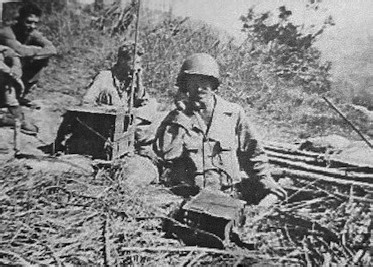
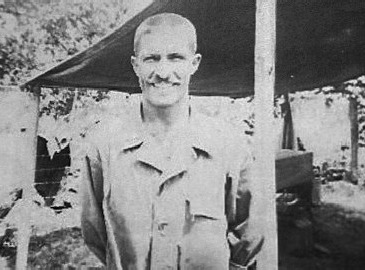
LEFT: Bryden Moon Sr. performing radio control mission while in the Philippines in February 1944. RIGHT: Bryden Moon Sr. during action in the Philippines, February 1944. Courtesy photos
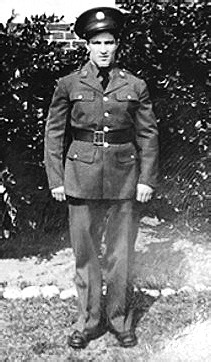
Bryden Moon Sr. early in his military career, which began in 1937.
His return to active duty in England included the June 6, 1944, invasion of Normandy on D-Day. As one of the radar intercept controllers, his task was to guide supporting air control for the troops coming ashore by identifying enemy targets.
“We had the high level and did not lose a plane; the Royal Air Force had the low level,” he wrote, not elaborating on the RAF’s success flying directly into the teeth of the German counterassault.
The following year, Moon found himself back in the Pacific Theatre of World War II. He landed in Luzon, the largest island in the Philippines and home to the capital city of Manila.
It was here he received the Bronze Star, awarded “for either heroic achievement, heroic service, meritorious achievement or meritorious service in a combat zone.”
The honor stemmed from an incident April 2, 1945, when a U.S. pilot bailed out because his engine failed and the Japanese were closing in.
“I tried my best to get him in, and that effort created a bond between me and the other pilots,” Moon Sr. said.
The letter accompanying his medal stated, “First Lt. Bryden E. Moon, while directing an air strike in close support of an infantry battalion, came under enemy artillery fire. With high explosive shells bursting around him, and with complete disregard for his own safety, he remained exposed to enemy artillery fire and continued directing planes into the target until the mission was completed.”
Following the end of the global conflict, Moon was promoted to captain in May 1949 and in 1950, he was assigned to the Office of Special Investigations at the Pentagon. During his three years there, he was promoted to major.
In 1953, he was assigned to another overseas tour, serving in the Korean War as it winded down.
Moon eventually retired in 1966 after logging 29 years of service. He died June 17, 2005, in San Antonio.